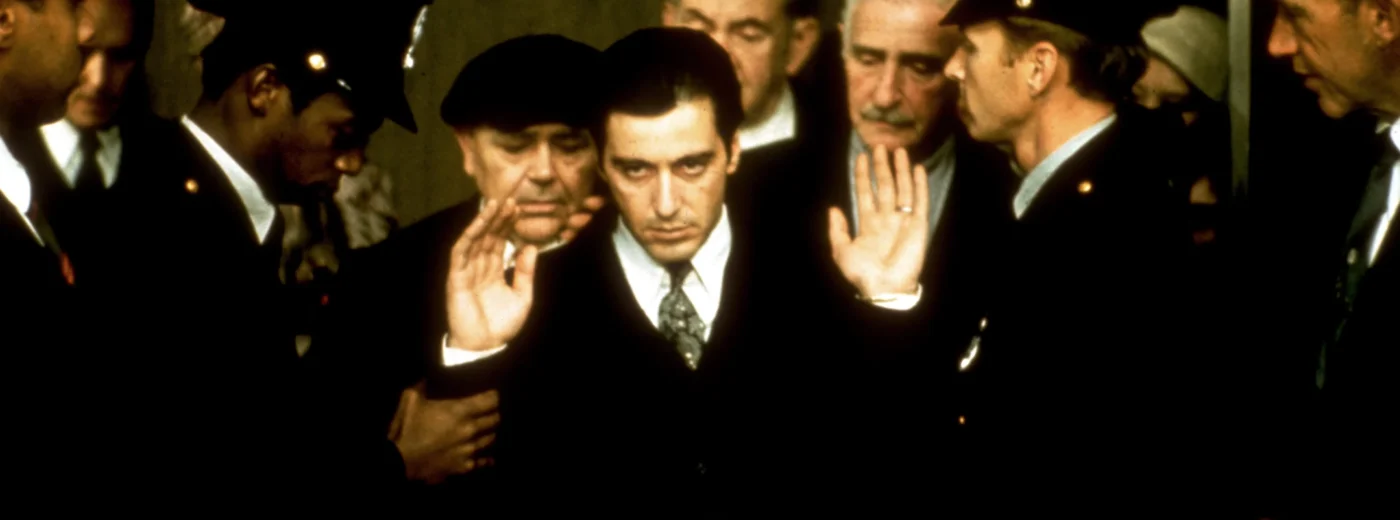
Most trilogies fall apart. The first film is great, the sequel is decent, and the third one exists because the studio wanted more money. These ten trilogies are different. Every installment earns its place. No filler. No drop in quality. Three films that function as one complete story.
1. The Before Trilogy (1995, 2004, 2014)
Before Sunrise, Before Sunset, Before Midnight. Richard Linklater filmed Ethan Hawke and Julie Delpy across two decades, checking in on Jesse and Celine every nine years. The first film is pure romantic fantasy. The second is laced with regret. The third is about whether love can survive the reality of actually being together. No trilogy has ever captured the arc of a relationship with this much honesty.
2. Three Colors Trilogy (1993, 1994)
Krzysztof Kieślowski’s Blue, White, and Red are loosely inspired by the French flag and the ideals it represents: liberty, equality, fraternity. Blue is about a woman trying to erase herself after tragedy. White is a dark comedy about a man seeking revenge through success. Red is a meditation on connection and fate. They work independently, but the final scene of Red ties all three together in a way that will leave you breathless.
3. The Dark Knight Trilogy (2005, 2008, 2012)
Christopher Nolan turned a comic book franchise into a crime epic. Batman Begins is an origin story that treats its hero with psychological seriousness. The Dark Knight is one of the greatest films of the 2000s, full stop. The Dark Knight Rises closes the loop with a story about sacrifice and legacy. Heath Ledger’s Joker gets all the attention, but the trilogy’s real achievement is making Bruce Wayne’s emotional journey feel earned across all three films.
4. The Lord of the Rings Trilogy (2001, 2002, 2003)
Peter Jackson filmed all three back to back in New Zealand, and the result is the most ambitious fantasy production ever completed. Fellowship is a perfect adventure film. Two Towers raises the stakes with the Battle of Helm’s Deep. Return of the King sweeps the Oscars and delivers an ending so emotionally overwhelming it needs four codas to land properly. There is nothing like watching the extended editions back to back. Twelve hours. Worth every minute.
5. The Dollars Trilogy (1964, 1965, 1966)
Sergio Leone and Clint Eastwood invented the Spaghetti Western with A Fistful of Dollars, For a Few Dollars More, and The Good, the Bad and the Ugly. Each film is better than the last. The final installment is a masterpiece of tension, scored by Ennio Morricone’s iconic compositions. The three way standoff in the cemetery is one of the most perfectly constructed scenes in cinema history. Leone understood that great filmmaking is about time: when to hold a shot, when to cut, and when to let the silence do the work.
6. Toy Story Trilogy (1995, 1999, 2010)
Yes, there’s a fourth one. No, we’re not counting it here. The original three Toy Story films form one of the most emotionally satisfying arcs in animated cinema. The first establishes the world. The second deepens it with themes of mortality and obsolescence. The third is about letting go, growing up, and the end of childhood. Andy giving away his toys in the final scene is devastatingly effective because Pixar spent fifteen years earning that moment.
7. The Vengeance Trilogy (2002, 2003, 2005)
Park Chan-wook’s Sympathy for Mr. Vengeance, Oldboy, and Lady Vengeance are not connected by plot but by obsession. Each film explores revenge from a different angle: class rage, psychological torment, and collective justice. Oldboy is the most famous, with its corridor fight and gut punch twist, but Lady Vengeance is the most visually stunning and emotionally complex of the three. Not for the faint of heart, but unforgettable.
8. The Godfather Trilogy (1972, 1974, 1990)
The first two are among the greatest films ever made. The Godfather is a perfect American tragedy. Part II deepens the story by running parallel timelines of father and son, showing how power corrupts across generations. Part III is the weakest, but even flawed Coppola is more compelling than most directors at their best. The recent “Coda” re-edit improves the third film significantly. Together, they form the definitive portrait of power, family, and moral decay.
9. The Apu Trilogy (1955, 1956, 1959)
Satyajit Ray’s Pather Panchali, Aparajito, and Apur Sansar follow one character from childhood in rural Bengal through university and into adulthood. Shot across five years with minimal budgets, these films are foundational works of world cinema. Ray’s camera finds beauty in the smallest moments: a train passing through a field of flowers, a child’s first encounter with rain. The trilogy is a masterclass in humanist filmmaking. If you’ve never explored Indian cinema, this is the place to start.
10. The Cornetto Trilogy (2004, 2007, 2013)
Edgar Wright, Simon Pegg, and Nick Frost made three genre comedies that share a universe of Cornetto ice cream, fence jumping, and increasingly chaotic pub crawls. Shaun of the Dead is a zombie film about refusing to grow up. Hot Fuzz is a buddy cop film about conformity. The World’s End is a sci-fi film about addiction and nostalgia. Each one works as both a loving tribute to and a sharp deconstruction of its genre. The World’s End is the most underrated of the three and arguably Wright’s best writing.
The Bottom Line
A great trilogy does something a single film can’t. It lets characters grow across years, lets themes deepen with repetition, and rewards patience with payoffs that only work because of what came before. Every trilogy on this list earns its three entries. No filler. Start with whichever one you haven’t seen yet.
Filmatic is reader supported. When you click our streaming links and sign up, we may earn a small commission at no extra cost to you. This helps us keep recommending great films.
0 Comments
Share your thoughts — all comments are moderated before appearing.