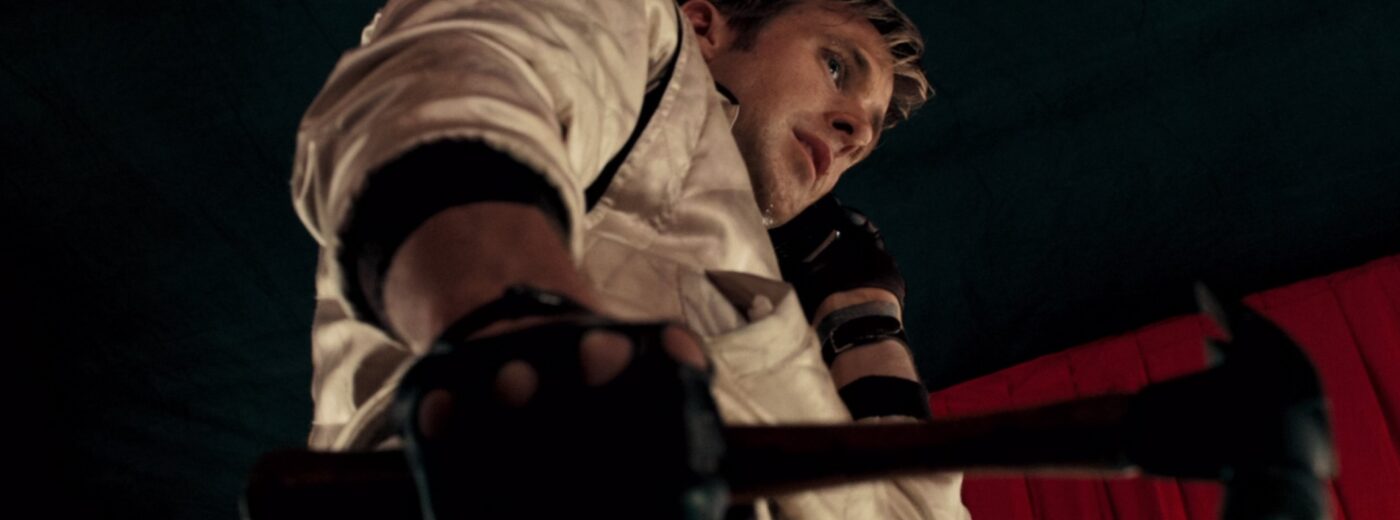
Before Ryan Gosling’s Driver ever put on that scorpion jacket, Alain Delon walked through Paris in a trench coat and fedora, saying almost nothing, and became the coolest man in cinema. Jean-Pierre Melville’s Le Samouraï (1967) is the blueprint for every stylish, silent loner thriller that followed, and it remains untouched.
Why You’ll Love It
Jef Costello is a contract killer who lives alone in a sparse apartment with a caged bird. He works with surgical precision, leaves no traces, and trusts no one. When an alibi falls apart after a hit, he finds himself hunted by both the police and his own employers. The plot is lean and merciless, stripped of anything that doesn’t serve the tension.
Melville shoots Paris like a city made of shadows and silence. Every frame is composed with the precision of a heist plan. The first ten minutes contain almost no dialogue, just Delon lying on his bed, smoking, watching light move across the ceiling. It is one of the most hypnotic openings in film history.
The Connection
Drive and Le Samouraï share DNA at the molecular level. Both are about men defined by what they don’t say. Both treat their cities as characters – Los Angeles and Paris become nocturnal playgrounds where violence erupts in sudden, precise bursts. Both use stillness as a weapon. Gosling’s Driver is a direct descendant of Delon’s Costello, right down to the leather gloves and the flat expression that could mean anything.
Nicolas Winding Refn has cited Melville as a primary influence, and once you see Le Samouraï, you’ll recognize it in every frame of Drive. The patient pacing, the sudden explosions of violence, the protagonist who is more icon than person – it all starts here.
What Makes Le Samouraï Special
Delon gives one of the great minimalist performances. He barely moves his face, but every micro-expression carries weight. You understand Costello completely without him ever explaining himself. The film treats him with the same spare reverence that a samurai film treats its ronin – which is exactly Melville’s intention.
The Métro chase sequence is a masterclass in tension built from geography and glances rather than gunfire. Melville understood that the threat of violence is almost always more powerful than the violence itself.
The Bottom Line
If Drive made you fall in love with the idea of a silent, dangerous man moving through neon-lit streets, Le Samouraï is where that archetype was born. Over half a century old and still cooler than everything that came after it.
Filmatic is reader supported. When you click our streaming links and sign up, we may earn a small commission at no extra cost to you. This helps us keep recommending great films.

0 Comments
Share your thoughts — all comments are moderated before appearing.