Not every trilogy comes with Roman numerals. Some of the best three-film runs in cinema were never marketed as trilogies at all – they share a director, a sensibility, and a set of obsessions that make them feel like chapters in the same story. These five unofficial trilogies are worth watching back to back, even though nobody involved ever called them a trilogy.
1. David Fincher’s Obsession Trilogy: Zodiac, The Social Network, Gone Girl (2007, 2010, 2014)
Three films about men consumed by pursuit. In Zodiac, Jake Gyllenhaal’s cartoonist spends decades chasing a serial killer and destroys his relationships in the process. In The Social Network, Jesse Eisenberg’s Zuckerberg builds the world’s most connected platform while becoming the loneliest person in the room. In Gone Girl, Ben Affleck’s Nick Dunne discovers that the person pursuing him is the one he thought he knew best. Fincher shoots all three with the same clinical precision – cold light, muted colors, conversations that feel like interrogations. Together, they form a triptych about what happens when the thing you are looking for starts looking back.
2. Spike Jonze’s Identity Trilogy: Being John Malkovich, Adaptation, Her (1999, 2002, 2013)
What does it mean to be a person? Spike Jonze spent fourteen years circling this question. Being John Malkovich turns it into a surreal comedy about literally inhabiting someone else’s consciousness. Adaptation fragments it through Charlie Kaufman’s screenplay about a screenwriter trying to adapt a book while his fictional twin brother writes a thriller. Her resolves it with unexpected tenderness – Joaquin Phoenix falling in love with an operating system and the film refusing to treat it as a joke. Each film strips away another layer of identity until all that remains is the question of whether we are our memories, our relationships, or something else entirely.
3. Paul Thomas Anderson’s American Ambition Trilogy: There Will Be Blood, The Master, Phantom Thread (2007, 2012, 2017)
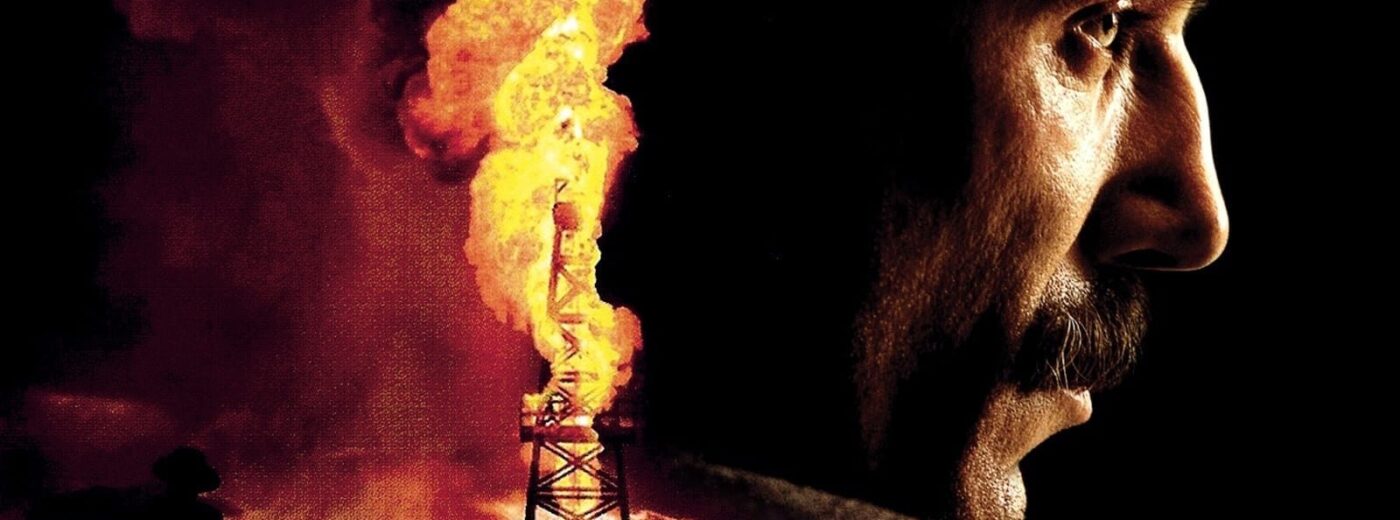
Daniel Day-Lewis, Joaquin Phoenix, and Daniel Day-Lewis again – three towering performances in three films about men who build empires and then discover that empires require other people. Daniel Plainview drills for oil and poisons every relationship he touches. Freddie Quell returns from war and attaches himself to a charismatic cult leader. Reynolds Woodcock designs couture and terrorizes every woman who enters his orbit. Anderson shoots American ambition as a disease – magnificent to watch, corrosive to live through. The dinner scene in Phantom Thread and the bowling alley scene in There Will Be Blood are two of the finest endings in modern cinema.
4. Michael Mann’s Nocturnal Crime Trilogy: Heat, Collateral, Miami Vice (1995, 2004, 2006)
Michael Mann is the only filmmaker who makes cities look the way they feel at 2am. Heat turns Los Angeles into a neon-lit chess board where Al Pacino’s detective and Robert De Niro’s thief orbit each other with the gravity of planets. Collateral strips it down to one taxi, one night, and Tom Cruise as a silver-haired hitman with a philosophical streak. Miami Vice – the most underrated of the three – pushes further into abstraction, turning the drug trade into a mood piece shot on early digital video that looks like a fever dream. Mann’s criminals are professionals who love their work. His cops are professionals who have forgotten how to love anything else.
5. Terrence Malick’s American Pastoral Trilogy: Badlands, Days of Heaven, The New World (1973, 1978, 2005)
Before Malick disappeared into experimental filmmaking, he made three of the most beautiful films in American cinema. Badlands follows a teenage couple on a murder spree across the Midwest, narrated by Sissy Spacek with the dispassionate wonder of someone reading from a diary. Days of Heaven sets a love triangle against the Texas wheat fields and captures the golden hour as well as any film ever has. The New World reimagines Pocahontas and John Smith as a collision between wonder and colonization. All three share Malick’s signature: a camera that drifts toward nature, voiceover that sounds like prayer, and a vision of America as a paradise that human beings are incapable of deserving. Watch them on the biggest screen you can find.
The Bottom Line
The best trilogies are not always the ones that were planned. Sometimes a director makes three films over a decade or two, and only in retrospect do the connections become clear – the same questions asked from different angles, the same obsessions explored with different faces. Watch these fifteen films. You will see patterns the directors themselves might not have intended. That is what makes them trilogies.
Filmatic is reader supported. When you click our streaming links and sign up, we may earn a small commission at no extra cost to you. This helps us keep recommending great films.


0 Comments
Share your thoughts — all comments are moderated before appearing.